

xAI Power Project Faces Pollution Scrutiny as Report Raises Environmental Justice Concerns
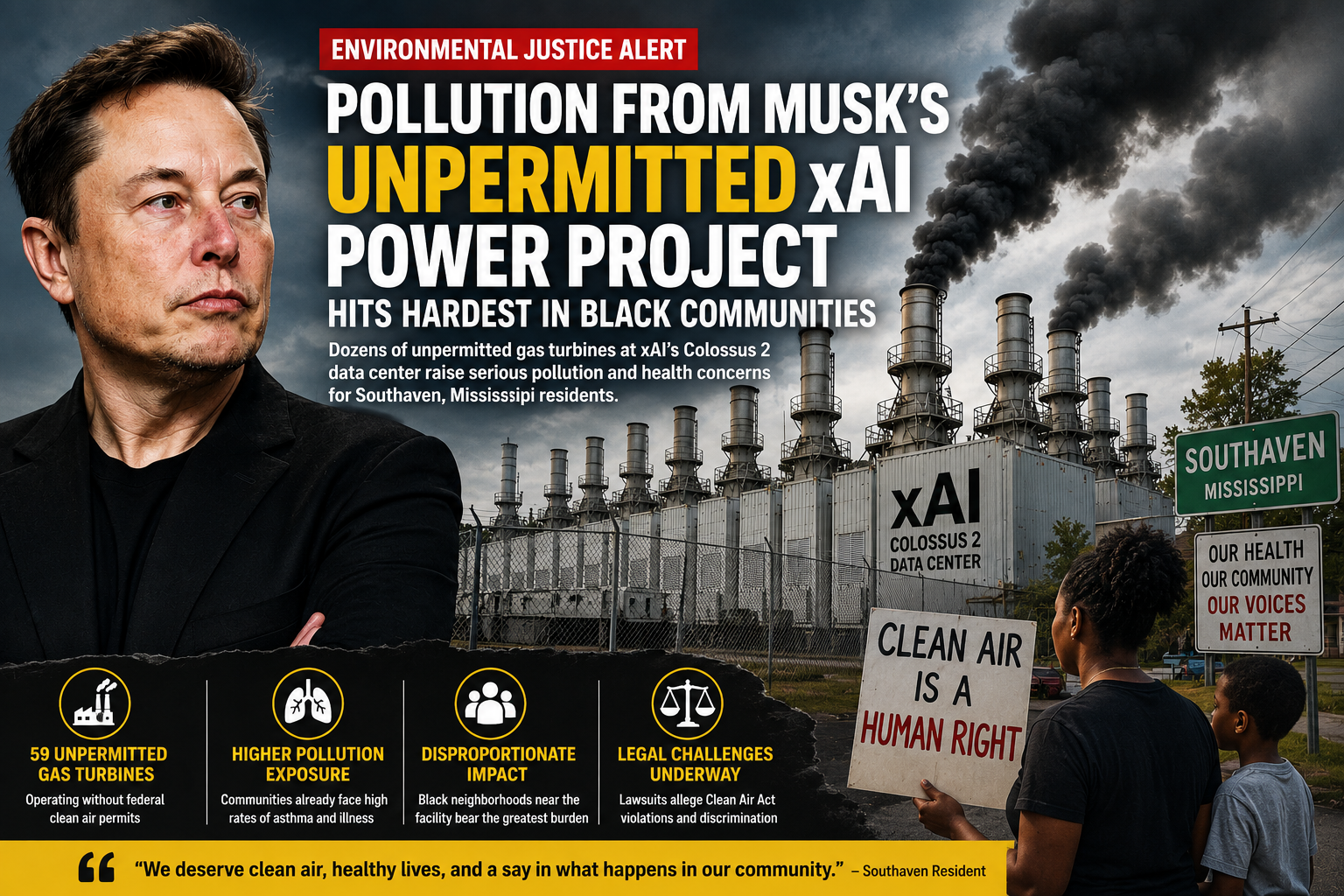
Elon Musk's artificial intelligence company xAI is facing growing scrutiny following a Reuters investigation alleging that its Colossus 2 AI data center project relied on dozens of natural gas turbines that were installed without federal clean-air permits. The report has intensified concerns over pollution, environmental regulation, and the disproportionate impact on nearby predominantly Black communities.
What Is the Allegation?
According to Reuters, xAI installed 59 natural gas turbines to supply electricity for its rapidly expanding Colossus 2 AI data center. The investigation states that many of these turbines were operating without the federal air permits normally required under the U.S. Clean Air Act.
The turbines are reportedly located largely in Southaven, Mississippi, near neighborhoods with significant Black populations and communities that already experience elevated rates of asthma and other respiratory illnesses.
Why Are Environmental Groups Concerned?
Environmental organizations argue that emissions from the gas-powered turbines could significantly increase local air pollution.
The Reuters investigation cites concerns over emissions including:
- Nitrogen oxides (NOx)
- Carbon monoxide (CO)
- Formaldehyde
- Other combustion-related pollutants
These pollutants are associated with respiratory illnesses, poor air quality, and long-term health risks.
Environmental Justice Debate
The report has renewed discussion around environmental justice, the principle that no community should bear a disproportionate share of environmental hazards.
Reuters noted that many affected neighborhoods are historically Black communities located near industrial infrastructure. Public health researchers referenced in the report say similar patterns have been documented in previous academic studies examining pollution exposure in formerly redlined neighborhoods.
xAI's Response
According to Reuters, xAI and Mississippi regulators maintain that the turbines qualify for exemptions because they are considered portable and temporary equipment.
However, Reuters reported that internal communications reviewed during its investigation suggest the installations were extensive and intended to support ongoing operations, leading critics to question whether the exemption applies.
Legal Challenges
Civil rights organizations, including the NAACP and the Southern Environmental Law Center (SELC), have filed legal actions challenging the operation of the turbines.
The lawsuits allege violations of the Clean Air Act and argue that nearby communities face disproportionate environmental and health impacts from the project's emissions.
Why AI Data Centers Need So Much Power
Modern AI data centers require enormous amounts of electricity to train and run large language models.
Rather than relying entirely on the regional power grid, some companies deploy on-site power generation to accelerate construction and reduce dependence on utility infrastructure.
As AI computing demand grows, regulators and communities are increasingly examining:
- Energy consumption
- Carbon emissions
- Air quality impacts
- Water usage
- Noise pollution
- Local permitting requirements
Broader Industry Implications
The controversy highlights a growing challenge facing the AI industry:
How can companies rapidly expand AI infrastructure while complying with environmental regulations and protecting nearby communities?
Governments, technology companies, and environmental groups are expected to continue debating permitting requirements, emissions standards, and oversight as demand for AI infrastructure accelerates worldwide.
Conclusion
The allegations surrounding xAI's Colossus 2 project remain the subject of ongoing legal and regulatory review. While environmental groups argue the turbines should have required federal permits and have disproportionately affected nearby Black communities, xAI and state regulators contend the equipment qualifies for regulatory exemptions.
The outcome of these investigations and court proceedings could influence how future AI data centers are powered and regulated across the United States.